POSIX Concurrency Guarantees as the Deciding Factor When Choosing AI Agent Storage
Agent storage fails under parallel writes unless rename, fsync, and locks truly hold.
Sponsored by Archil
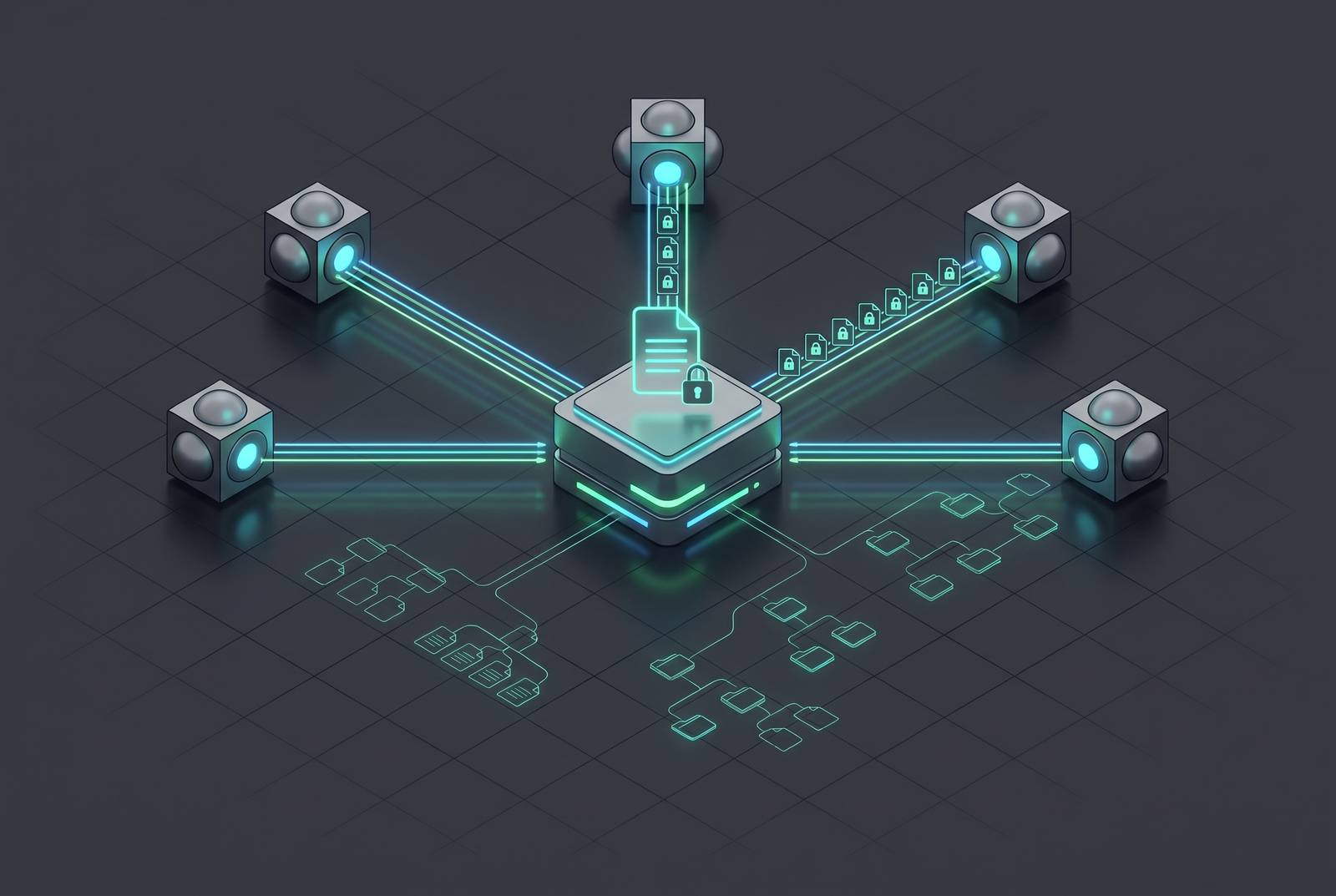
A persistent filesystem workspace for AI agents across sessions and parallel runs needs more than files that survive a restart. It needs atomic rename, durable fsync, directory listings that stay consistent, and clear rules for how writers work together. Some options are built around real POSIX semantics, while managed NFS services offer another route. The deciding factor is what happens when agents touch the same state at once.
Why concurrent AI agents break storage assumptions that single-agent systems never stress
CoAgent describes two agents working on a live Kubernetes cluster, one fixing a bad container image and the other getting a canary release ready. Both report success, yet their overlapping reads and writes leave the canary running the known-bad image.
Neither agent needed a better answer from its model. Their combined result matches no serial execution of their tasks, which makes this a serializability violation. The paper reports that more than a third of failures in a large audit of multi-agent traces involve inter-agent misalignment, including agents acting on the same resource without knowing about each other. Success messages are not a concurrency protocol. Prompt engineering cannot make conflicting writes behave as though they happened in a safe order.
Agents need that same safe ordering when they use familiar file operations such as open, read, rename, and flock. Models trained on environments with these file operations reach for those tools naturally. A single agent may never expose the limits of a backend that accepts filesystem calls without providing filesystem semantics. Parallel agents do. They turn hidden assumptions about visibility, durability, and ownership into silent corruption, stale reads, and lost writes.
What POSIX actually guarantees, and which of those guarantees break under concurrent agent workloads
Atomic rename makes a name change visible as one operation, so no one sees a state halfway through the change. For agents handing off files, that prevents a concurrent reader from encountering a half-published replacement or a directory entry pointing nowhere. The handoff is the critical moment. Accepting rename() is not enough if another agent can see the operation halfway through.
Durable fsync() means the write is durable before the call returns. It prevents an agent from treating buffered data as committed, only to lose it when the process crashes or the environment is evicted. An acknowledgment must mean what it says.
Advisory locks coordinate cooperating processes within the scope supported by the filesystem. Local lock support does not establish coordination across machines, so an agent on one node cannot assume another node sees its flock() or fcntl() lock. Scope is part of the guarantee. Advisory locks should be treated as coordination for processes on one machine, with explicit ownership required for writers across machines.
A linearizable directory listing presents a coherent view rather than mixing entries from before and after a concurrent rename. It prevents parallel directory traversal from sending an agent after a file another agent has moved or deleted. These properties need separate answers. A storage layer can provide durable writes while falling short on rename, listing, or lock scope, so “POSIX-compatible” is the start of an evaluation.
Why the gap between POSIX semantics and object storage semantics cannot be safely papered over for agents
Object stores such as S3, GCS, Azure Blob, and R2 provide strong consistency per key. That is useful, but it does not establish atomic relationships between filesystem directory entries. One object is not a directory transaction. Giving an object API a mount point changes how software reaches it while potentially leaving the semantics of concurrent operations unchanged.
GCS Fuse shows the known limits of this adapter approach: high latency across file operations, no support for flock, and non-atomic rename for flat-namespace buckets. An agent can receive a successful rename result while a concurrent reader observes an intermediate state. Both participants think the handoff worked, which leaves the failure without an obvious owner.
Locking can hide an equally awkward mismatch. A FUSE mount may accept a lock call without propagating its state to another node, leaving two agents convinced that each has exclusive access. A Redis lock, database row lock, or in-memory semaphore adds another consistency boundary rather than repairing the filesystem’s own guarantees. The lock and the files must now agree.
A different approach is a filesystem that uses buckets as backing storage, such as S3, GCS, R2, or Azure Blob. Such a filesystem can make writes durable when fsync returns and are copied to the bucket in the background, rather than depending on a FUSE translation of the bucket API. CoAgent explains that writes to live shared state take effect as they run, so middleware has no safe buffering window in which to catch everything and quietly put it back in order.
What serializability actually requires from a storage layer, and why advisory locks alone are not the answer
Serializability means that overlapping work produces a result equivalent to some serial order, a requirement violated in the canary example. Individual atomic file operations are necessary building blocks, but they do not automatically make an entire agent task serializable.
CoAgent explains that two-phase locking can block other work while an agent thinks, while optimistic concurrency control can discard minutes of work after a conflict. Neither outcome makes parallelism especially rewarding. The paper instead uses the agent’s ability to judge whether a conflicting write invalidates its plan and repair the operations that depended on it.
Its Monotonic Trajectory Pre-Order protocol fixes a serialization order at launch, filters reads by that order, and applies writes speculatively in place. Tool-registered inverse operations then undo and reorder misplaced writes. On ten contended workloads, the middleware stays within 5% of serial correctness at a 1.4× speedup and near-serial token cost. The protocol still needs durable, linearizable writes and cannot bring back a write that the storage layer dropped without warning.
MasuGate extends this reasoning to authorization over changing budgets, inventory, and cloud quotas. Its policy-state serializability condition requires committed effects to be authorized against the policy state immediately before they occur. Permission can go stale too. The storage view and governance view must therefore agree, making storage part of the correctness boundary.
How AWS S3 Files and Google Filestore for Agents approach the POSIX guarantee problem
Amazon S3 Files went GA on April 7, 2026, using Elastic File System technology with S3 to provide NFS v4.1/v4.2 filesystem semantics. It has read-after-write consistency, file locking, and POSIX permissions in place of an adapter that makes bucket operations look like a filesystem. The filesystem layer does real work. Its scope is AWS-native, however, so it does not serve data residing in GCS or R2 for multi-cloud agent deployments.
Google Cloud Filestore takes the native NFS-backed POSIX route. That is a credible response to the same semantic gap. The important comparison is not which service has the friendliest mount command, but whether the managed filesystem supplies the guarantees that an adapter leaves unresolved.
NFS v4 lock state provides a meaningful distinction because the server maintains and arbitrates locks across clients. Agents on different nodes can therefore use that server-managed lock state to work together. Cooperation is still required. The locks remain advisory, so clients that do not honor them are not made safe by the protocol’s presence. Managed NFS gives agents a better base for shared writes, but concurrent agent actions still need more to work as transactions.
How do you evaluate a shared filesystem that persists between agent sessions?
The first question for a vendor is whether rename() is atomic under concurrent access. The useful answer describes what another reader can observe. Next comes the durability boundary. What exactly has become durable when fsync() returns, and can a crash still erase data acknowledged as committed?
Are advisory locks propagated across nodes, or must the application assign explicit ownership to writers? Can readdir() expose a mixture of entries from before and after a rename? Shared access is not shared coordination. Multiple mounts establish access, while the lock and listing guarantees determine what agents can safely infer from that access.
Some implementations run their own filesystem inside Firecracker microVMs, each with its own kernel. Such disks and sandboxes can support atomic rename, fsync, mmap, hard links, symlinks, and sparse files, allowing familiar bash tools to run unmodified against persistent files. Buckets that are already supported can mount without migration, and the bucket stays the source of truth. Disks can mount on many machines simultaneously with a consistent view, but that must not be confused with cross-machine advisory locking. Explicit writer ownership remains the coordination requirement.
Some disks checkpoint and branch rapidly regardless of size, supporting parallel attempts and rollbacks, while elastic storage is metered on active data. A fast branch is not serializability. CoAgent identifies fork-and-merge isolation as offering only weak read-committed isolation, so branch speed does not by itself make merging concurrent work safe. Buyers also need to ask whether agents are meant to share a workspace or have separate per-agent or per-run workspaces, and how workspace identity and mount paths carry over across sessions.
The remaining questions concern production history and the security boundary. How long has the underlying infrastructure operated at scale? Where do credentials live, and what outbound access is allowed? A filesystem evaluation that stops at file operations misses the code that will be using them.
How the multi-tenant case raises the POSIX stakes further, and what storage-layer enforcement must provide
In a multi-tenant agent product, incorrect shared state can become exposure of another customer’s data. A stale lookup or wrongly resolved path is no longer only a correctness failure inside one workspace. Familiar names can make this surprisingly easy. Two tenants can each have resources called “production”, “orders”, or “main”, and agent-generated context can select the wrong one if a name is treated as authority. No attacker is needed.
Retrieval and enrichment paths widen that risk beyond the primary record store. A shared embeddings index can return another tenant’s vectors when a query omits its tenant filter, while a knowledge graph can merge employees with the same name. Background summarization can likewise use elevated credentials to read shared records and then write results without putting tenant scope back in place. Signed URLs introduce another quiet route. Signing an object key supplied by an agent without checking who owns it can expose data even when other access to records is carefully checked.
The boundaries around filesystem paths, execution environments, and credentials must each hold on their own. Per-tenant disks need storage-enforced path scope so that dropping an application filter cannot broaden access. Mounting storage in place rather than copying datasets into a shared sandbox preserves that boundary. Execution needs its own isolation. Firecracker microVMs with separate guest kernels, rather than the shared host kernel of standard containers, can separate tenants’ execution environments.
Credentials must stay outside those environments because even an ordinary printenv can reveal secrets stored in environment variables. Network-boundary brokering gives the agent a credential reference rather than a secret it can read, preventing credentials from undoing an otherwise isolated disk and sandbox. Every boundary must agree about the tenant. For multi-tenant agent products, POSIX concurrency guarantees and tenant isolation are the same concern at different scopes, keeping state changes within the order and authority they belong to.
This article is sponsored by Archil.