Reattachable Block Volumes Versus Reconstructed Working Directories for Agent Task Continuity
Volumes keep environments and files, but neither approach settles who may resume.
Sponsored by Archil
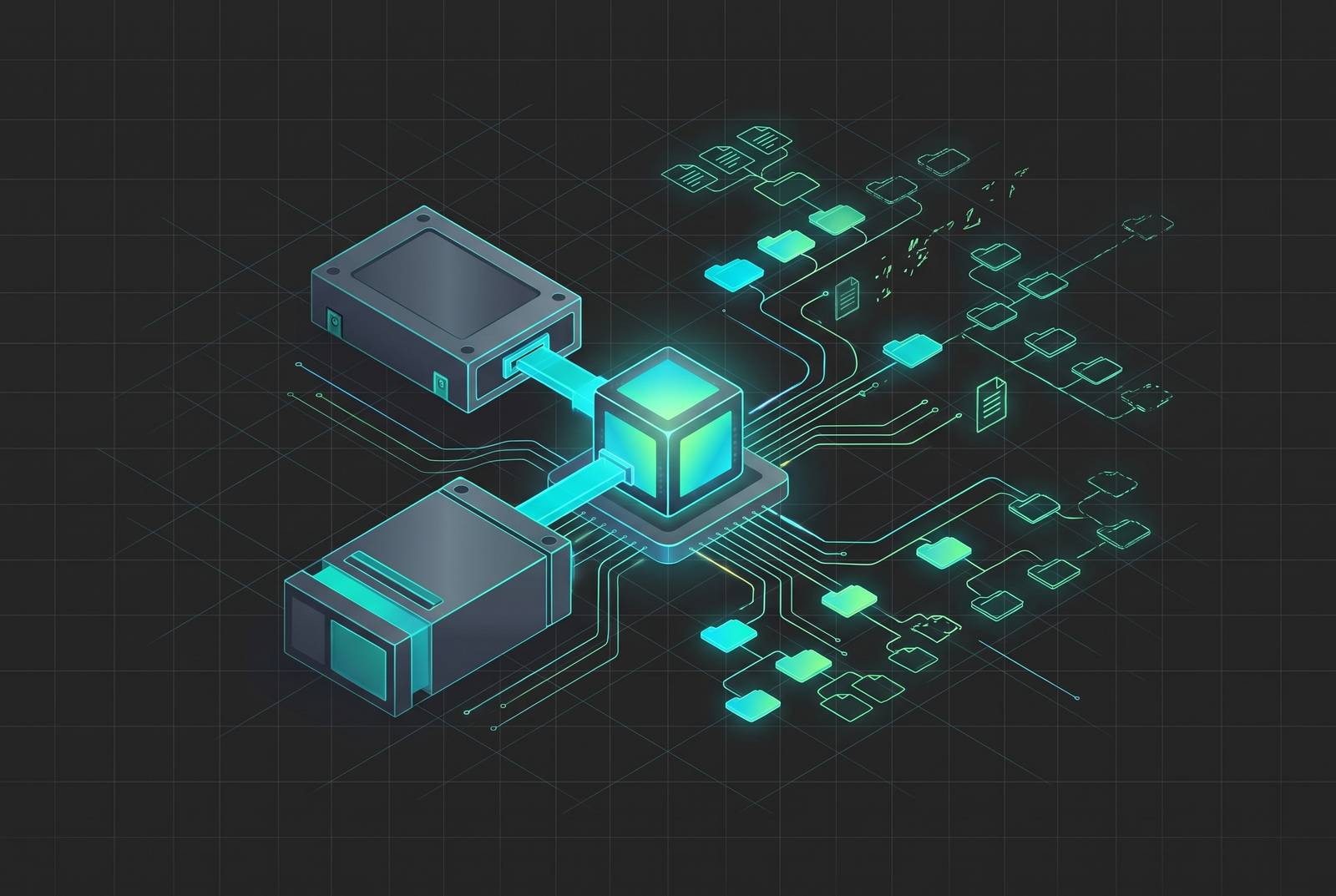
Reattachable block volumes preserve an AI agent’s installed environment and files across sandbox restarts, but not running processes or in-memory state. Reconstructed working directories bring back saved artifacts and rebuild an environment from its specifications. The choice depends on which state must survive, but both approaches still need rules for who may resume work and which external effects may happen again.
What an interruption actually takes away from a long-horizon agent
An agent has installed its tools, edited a repository, and started a calculation when its sandbox disappears. Some results are files, some are still in memory, and a notification may already have gone out. Those are different kinds of progress. Recovering the repository does not recover the calculation, and recovering either does not unsend the notification. “Resume” is doing rather a lot of work for one button.
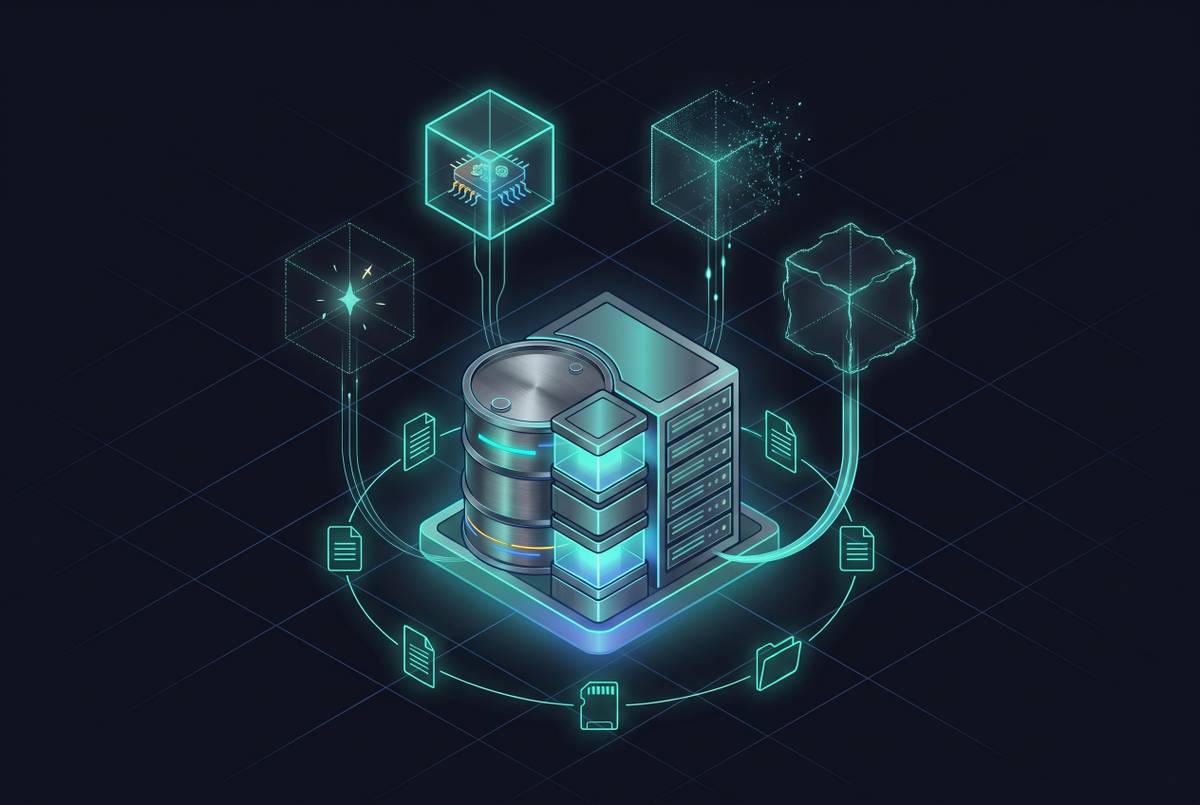
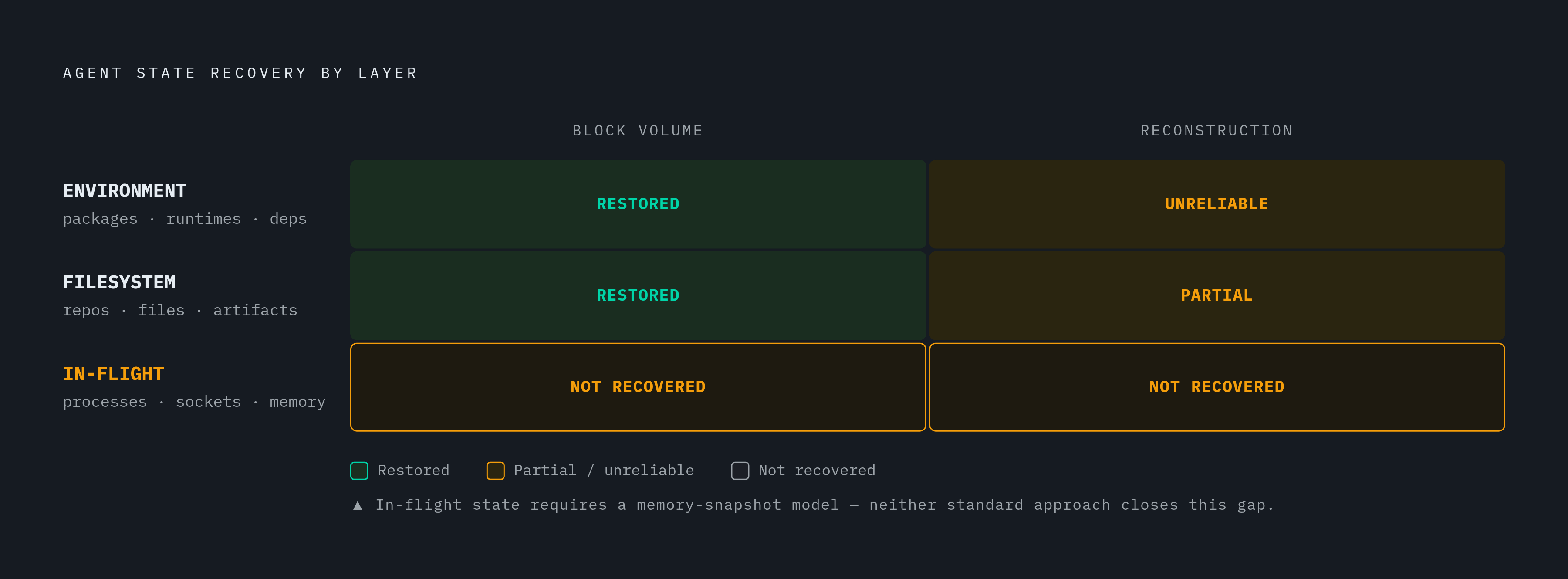
The loss spans at least three distinct layers. The installed environment includes packages, runtimes, and system dependencies, while the filesystem holds repositories, working files, and generated artifacts. In-flight execution includes open processes, sockets, and in-memory buffers. These layers fail independently of one another. A process crash can leave files intact, a sandbox teardown can destroy the installed environment while an artifact checkpoint survives, and a host migration can lose sockets even when files remain available.
Zhenyu Zhao and Roy Zhao’s Runtime-Independent Persistent Agents formalizes a related distinction through the continuity-bearing substrate P_t = (I_t, M_t, B_t), comprising identity, memory, and executable body. Their model separates that substrate from replaceable execution and interaction bindings, so changing a host or harness need not mean starting a different agent. But continuity also has an external edge. If recovery repeats payment calls, notifications, or ticketing operations that already succeeded, a lost-progress problem becomes a correctness problem.
What reconstructed working directories actually preserve and where they stop
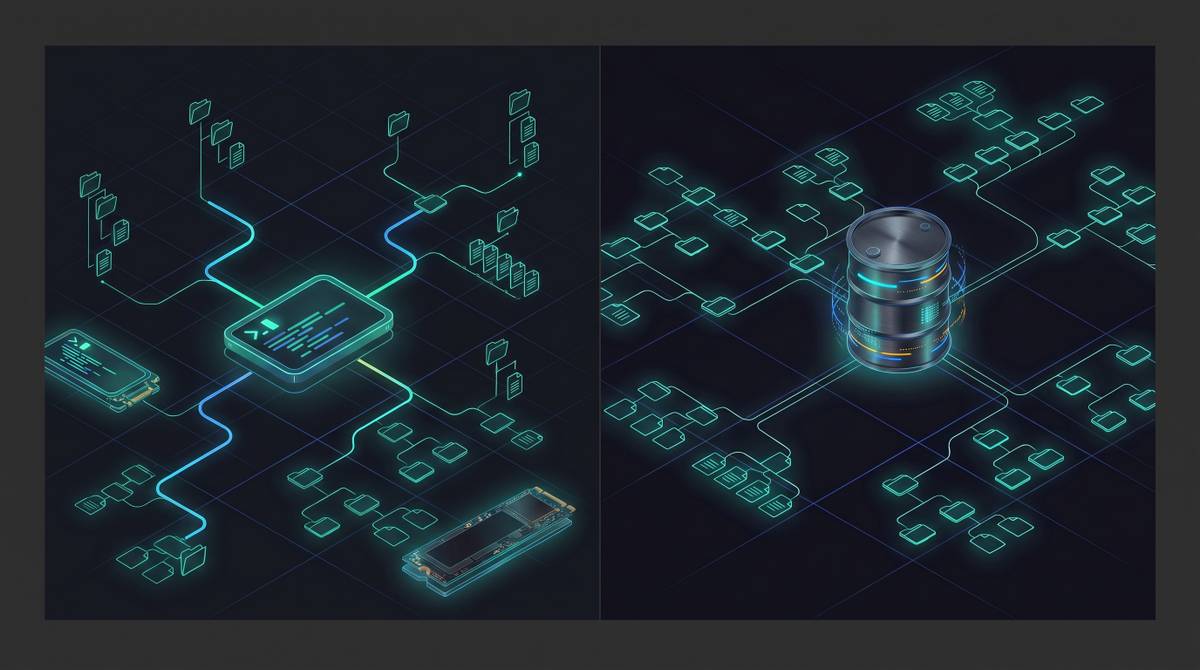
A reconstructed working directory starts with saved artifacts and instructions for how to rebuild the environment. It can restore files and replay a deterministic install script, but it cannot recover in-memory buffers, open process handles, or the time already spent on discarded work. That is a useful, bounded promise. A lockfile or Dockerfile can spell out the whole installed environment, and a truly short task may have little unfinished work worth keeping. When no external effects have occurred, starting again can be entirely reasonable.
An install step may depend on an external registry or behave non-deterministically, so repeating the instructions is not necessarily the same as restoring the environment. Partial results may represent hours of compute. Tool settings made interactively may never have reached the rebuild script at all. Reconstruction then becomes less like reopening a desk and more like assembling it again while trying to remember which drawer held the work.
Event-log reconstruction has a further limit because replaying actions can also repeat their effects. A recovery log must show which effects are already committed and which actions still need to happen, then skip the committed effects during replay. The log alone is not enough. Zhao and Zhao document a planned worker interruption recovered through the native task API with the checkpoint preserved, a stale reply rejected, and one task completion recorded. That outcome depended on durable checkpointed state, rather than simply asking the agent to retrace its steps.
How reattachable block volumes preserve files between AI sandbox sessions
A reattachable persistent volume preserves the installed environment and filesystem state written to it, including packages, runtimes, working files, and generated artifacts. On resume, those contents do not need rebuilding. The boundary is the last volume write. Work that existed only in memory has not become durable merely because the process had a persistent disk nearby.
Plain reattachment does not preserve open processes, in-memory buffers, or network sockets when the sandbox is torn down. The compute substrate that held them is gone. For tasks dominated by environment setup and incremental file production, however, the volume can recover nearly all the expensive progress. For an expensive calculation never checkpointed to disk, it offers no more recovery of that calculation than reconstruction does.
Filestore agent volumes illustrate the attach-and-detach model. Announced as generally available with limited, allowlist-based access on November 9, 2026, they attach and detach in milliseconds, allowing orchestrators to suspend idle sandboxes and resume them when work arrives without manual volume management per agent run. Baseten’s memory-snapshot model addresses the gap left by plain disk reattachment by preserving in-memory state too. That is a broader preservation promise. It also brings more snapshot overhead and tighter coupling to a specific host.
Why a stable volume name is not the same as continuity of authority
Reattaching a volume gives a compute instance access to files while leaving its authority to continue the task unproven. Another instance may hold a copy of the same state and make the same claim. Both can recognize the agent’s identifier, a stable UUID that serves as a name tag.
Zhao and Zhao make this distinction explicit in their treatment of migration. Copying a directory to two servers copies the identifier too, but does not establish which copy may continue as the unique agent. An authority lease, fencing epoch, or declared multi-embodiment policy supplies the missing rule. Their migration approach addresses continuity across substitutions through an explicit protocol, rather than treating the successful movement of files as sufficient.
Jun He and Deying Yu’s August 2026 paper Beyond Memory approaches the same gap from the control plane. Their Continuity Kernel defines continuity as an unbroken, authorized lineage of accepted branch heads, with untrusted components proposing changes against an exact predecessor head. A short activation transaction revalidates ownership, pre-state authority, freshness, and effect uniqueness before atomically advancing the branch head. Without such control, retained storage can still suffer stale overwrites, unaudited exposures, or self-authorizing privilege escalation by models, tools, and background workers.
A fencing epoch, migration protocol, or continuity kernel must stop two instances from both taking the same recovered state as permission to act. Neither storage approach solves that on its own. Reconstruction can recreate a stale claimant just as a copied volume can preserve one.
Isolation requirements that apply regardless of which storage approach is used
A well-preserved workspace is not necessarily a safely contained workspace. If prompt injection leads an agent to read ambient credentials and send them to an arbitrary endpoint, the persistence model cannot stop it. Keeping the files intact does not prevent their exfiltration. Both storage approaches still need the protection of a broader sandbox.
The minimum credible sandbox combines a dedicated kernel per workload through a microVM or equivalent syscall interception, no ambient credentials or reachable cloud metadata endpoint, default-deny egress with an explicit allowlist, and hard resource caps. Secrets should stay outside the sandbox itself. Instead of environment variables or baked-in keys, a proxy should inject credentials at the network boundary so agent code never holds them directly. That boundary limits credential exposure from both malicious code and prompt injection.
Filestore enforces workspace boundary controls and granular access permissions to keep agents within designated directories and dynamic toolchains isolated across tenants. Those controls address shared-infrastructure data leakage, but they are not a substitute for naming the other sandbox mechanisms. A vendor should identify its hypervisor, default egress policy, and where secrets live, rather than leaving “secure sandbox” to perform the duties of an entire architecture.
How branching and checkpointing change the trade-off between volumes and reconstruction
Rebuilding an identical environment for every agent instance incurs an avoidable repeated setup cost. A pre-populated volume clone can supply that starting state without rebuilding it from package registries. This changes the comparison quite substantially. The choice is no longer limited to one surviving workspace or a directory assembled from scratch, because a durable environment can also become the source of independent workspaces.
Filestore supports point-in-time workspace snapshots and rapid volume cloning, with pre-populated workspaces created from golden templates in seconds. These tools let orchestrators fork environments to try parallel reasoning paths or roll back workspace state after an error. The golden-template pattern snapshots a fully configured environment once, then clones it for new runs. Each agent gets a ready filesystem without more network round-trips to package registries.
A checkpoint can also serve as the unit that moves between hosts. Zhao and Zhao demonstrate a separate cross-host task resumed from a verified artifact checkpoint, rather than depending on a live-attached volume following the agent. The portability unit is the checkpoint itself. This separates durable task state from the particular disk attachment used during execution, while retaining the need for a protocol that validates and rehydrates the saved state.
A snapshot restored for a parallel attempt needs a declared multi-embodiment policy, or fencing to stop both copies from causing the same external effects on their own. Workspace rollback has a similarly limited scope. Restoring earlier files does not undo a payment or notification already sent, so the recovery design still needs to account for committed effects.
Matching the storage architecture to what the task actually requires to survive
The practical decision starts with the state a task cannot afford to lose. For short, stateless, fully specified work, reconstruction is a sound fit when the environment is cheap to rebuild, partial results have little value, and no external effects have been issued. A deterministic code-generation step with a lockfile fits that description. Persistence is not automatically better just because it preserves more.
Multi-step coding and data-analysis tasks cross a different threshold. When setup is expensive, results accumulate over hours, or tools were configured interactively, persistent filesystem state is the minimum useful foundation. A reattachable volume saves the work of rebuilding that environment. If the costly progress instead lives in memory, disk persistence needs a checkpoint strategy that fits the task, or a memory-snapshot model whose overhead and host coupling fit it.
Host migration adds a portability requirement beyond restart recovery. Such tasks need a checkpoint-and-rehydrate protocol because a live-attached volume may not follow the agent to another host. Shared work introduces another requirement again. Multi-agent tasks need persistent shared storage with POSIX file semantics and write-conflict protection, which Filestore provides through its native support for Read-Write-Many and POSIX file locking. Shared access lets collaborators reach files, while the authority mechanism sets the rules for which actions they may take.
A durable, forkable filesystem can therefore anchor a long-horizon architecture, with each sandbox running in its own microVM and kernel and the rest of the stack accessing the same data through an S3-compatible API. That arrangement supports environment persistence, filesystem continuity, and fast branching without putting ambient credentials inside the sandbox. It still needs checkpointing for the execution state the task must retain, authority control for recovery and forks, and the isolation boundaries described above. The best storage choice is the one whose preservation promise matches the task, without quietly asking a disk to remember a process or decide who is in charge.
This article is sponsored by Archil.